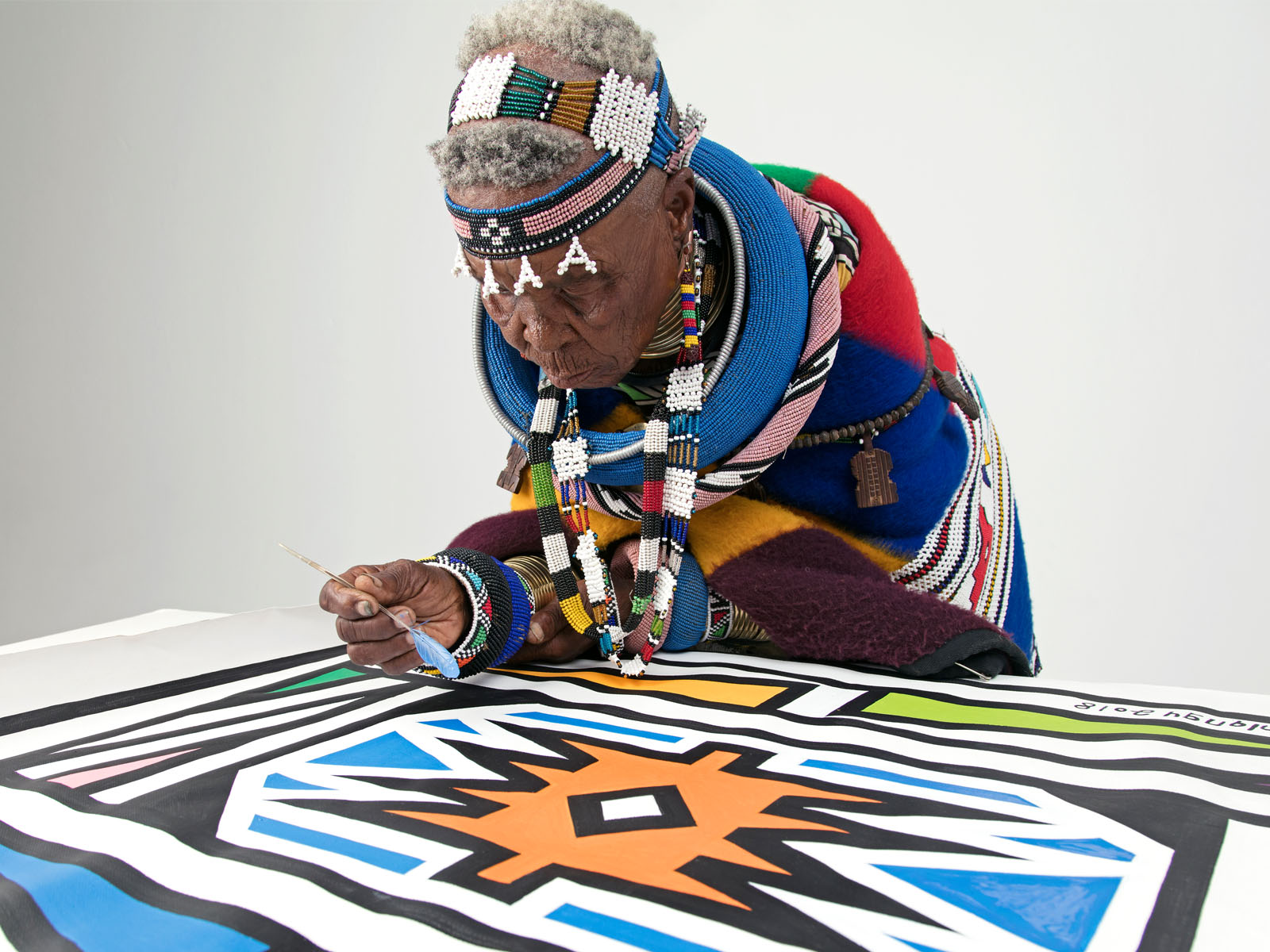
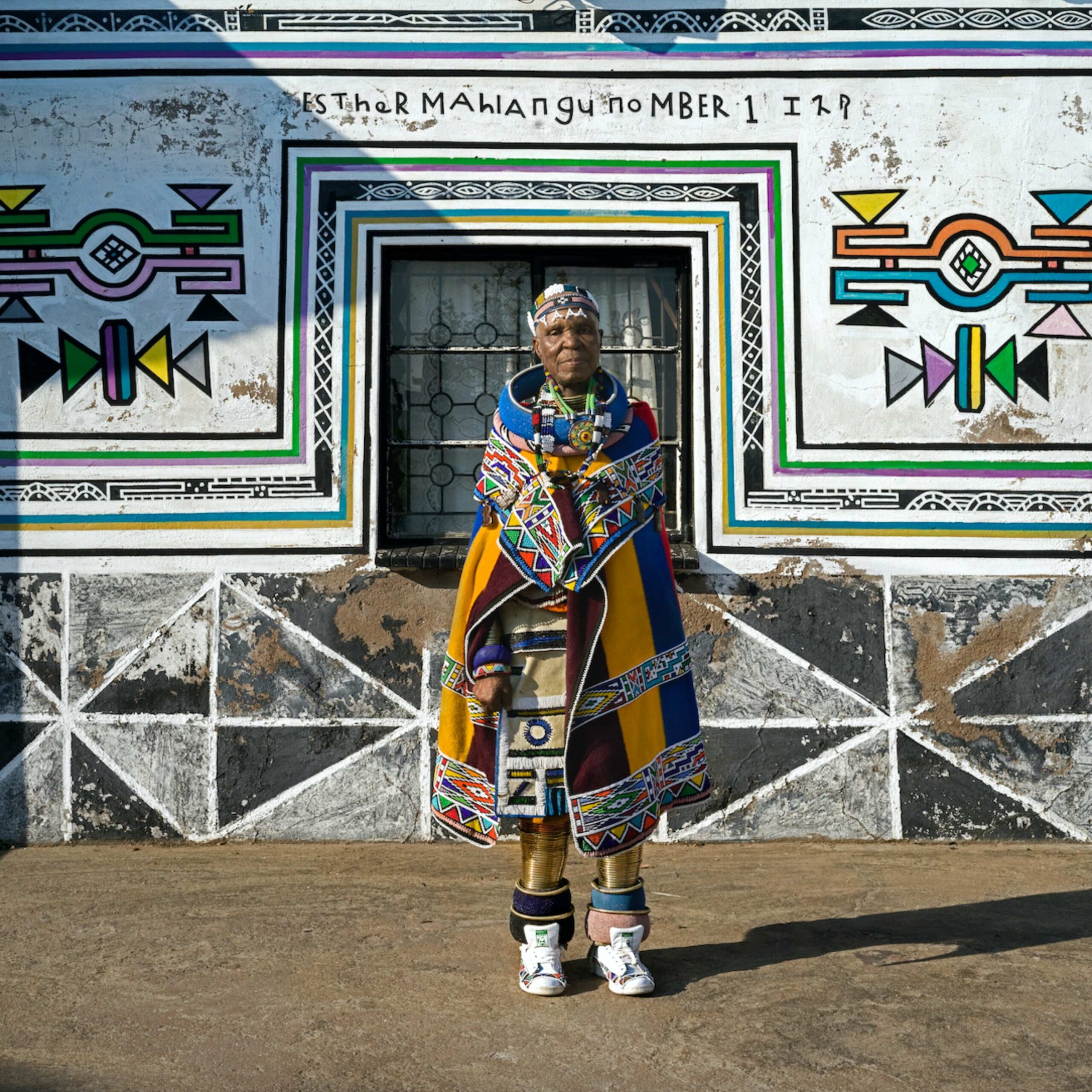
Born in 1935 in South Africa’s Mpumalanga Province, Mahlangu was introduced to the art of Ndebele mural painting at an early age by her grandmother. Within Ndebele culture, mural painting is not simply decorative; it is a sacred practice passed from one generation to the next. Each pattern and colour tells a story, symbolising identity, unity, womanhood, and spiritual continuity.
By the age of ten, Mahlangu was already painting the walls of her family home, mastering the bold lines and intricate geometric patterns that define Ndebele art. What began as a cultural responsibility soon revealed itself as extraordinary talent. Her work eventually caught the attention of audiences beyond her community, leading to invitations to exhibit at cultural events and art shows throughout South Africa.
What truly distinguishes Esther Mahlangu is her ability to honour tradition while fearlessly embracing innovation. While she remains faithful to the visual language of Ndebele mural painting, she has expanded its reach—experimenting with canvas, sculpture, fashion, architecture, and industrial design. Her art speaks fluently to contemporary audiences without losing its ancestral voice.
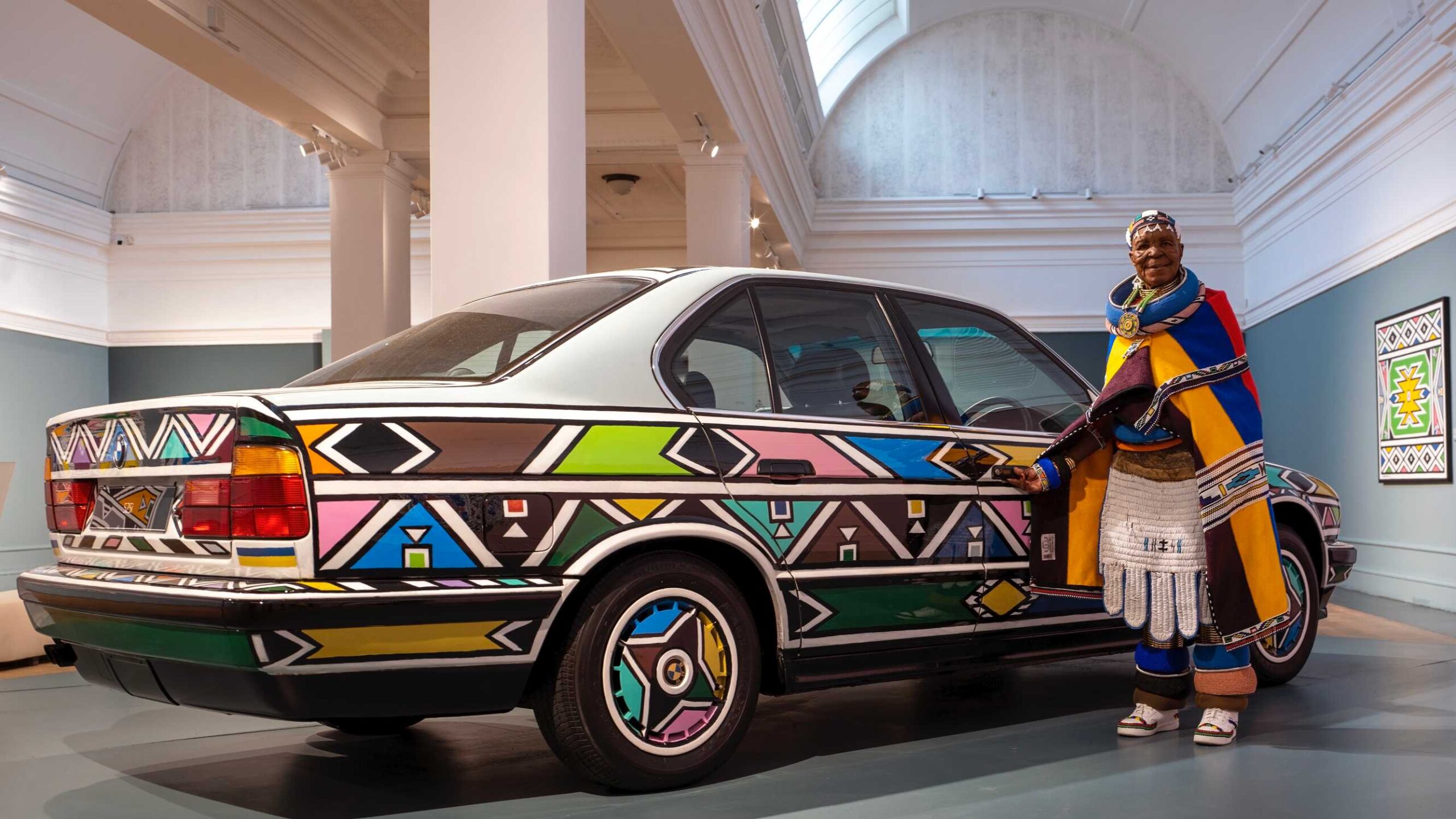
A defining moment in Mahlangu’s international career came in 1991, when she was invited to collaborate on the prestigious BMW Art Car project. Becoming the first African artist to participate in the series, she transformed a BMW 525i with hand-painted Ndebele motifs. The result was a moving, drivable artwork that carried South African culture onto the global stage, redefining how traditional African art could be experienced.
Over the decades, Mahlangu has received numerous awards and honours, cementing her status as a cultural ambassador and global icon. Her work has been exhibited in leading museums and galleries across the world—from New York and Paris to Tokyo—introducing millions to the richness and sophistication of Ndebele aesthetics.
As she approaches her 90th year, Esther Mahlangu continues to create, teach, and inspire. Her enduring commitment to her craft stands as a powerful reminder that tradition is not static—it evolves, adapts, and thrives when nurtured with respect and imagination.
In a rapidly changing world, Esther Mahlangu’s art reminds us of the timeless power of cultural expression. Her legacy lives not only in bold lines and brilliant colours, but in the generations she inspires to embrace their roots while boldly shaping the future.